📄 Digital book in PDF · read it on your phone or print it
The tank's three layers, the leaching bed (also called weeping bed, tile bed or drain field), mounds and pump chambers, what goes down the drain, frost and cottage season, the warning signs and whom to call. One topic per page: the drawing first, then what to remember. 64 illustrated pages.
🔒 Secure checkout · PDF by email · 30-day guarantee
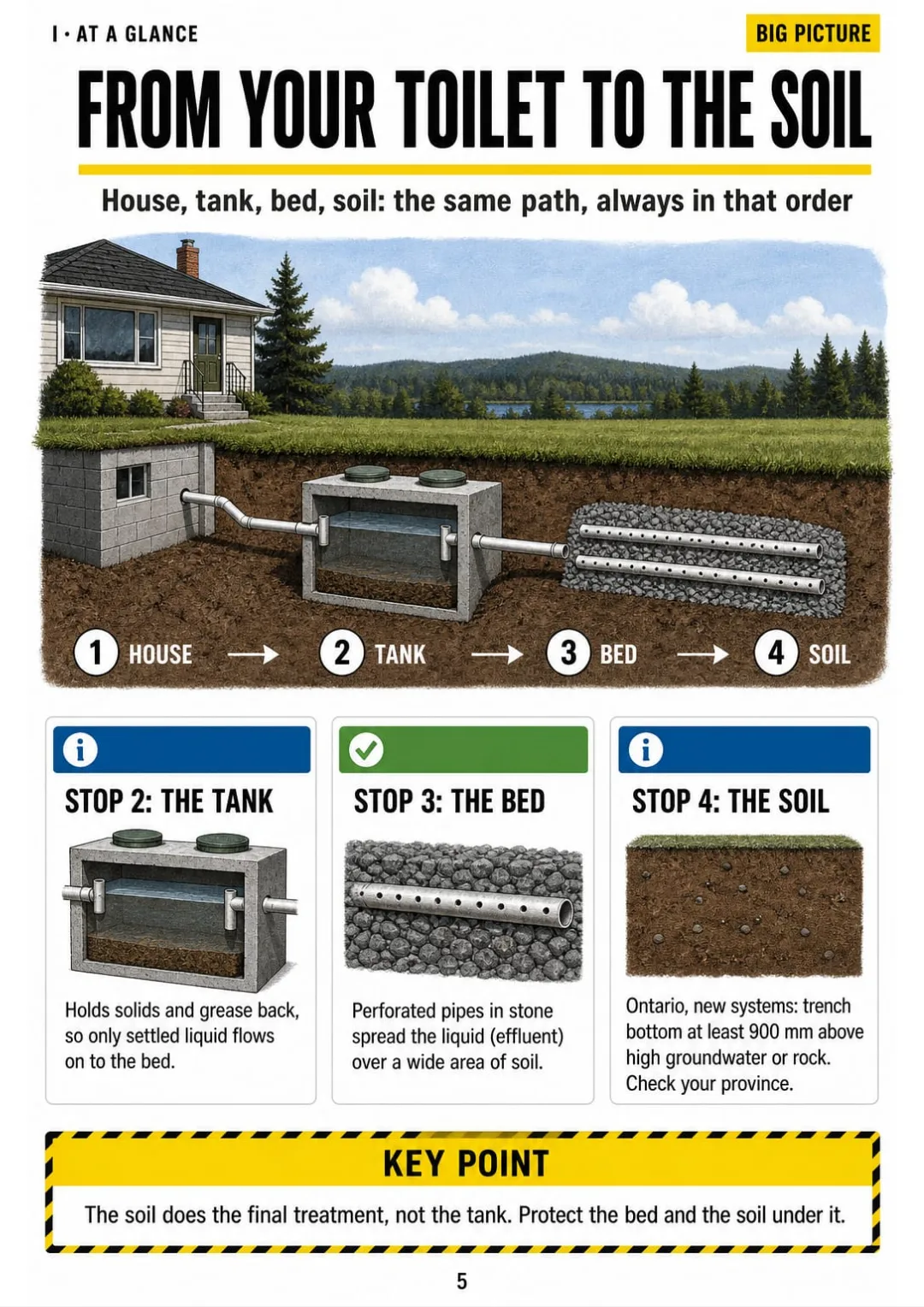
Every page has one big drawing and a box with the layers, distances and steps you need to know:


Swipe to see more →
These are real pages from the book. The table of contents is the full one: 8 parts and 60 topics.
You're standing on the lawn over your leaching bed after a week of rain, and there's a soft, soggy patch. You can't tell if it's normal or the start of a problem.
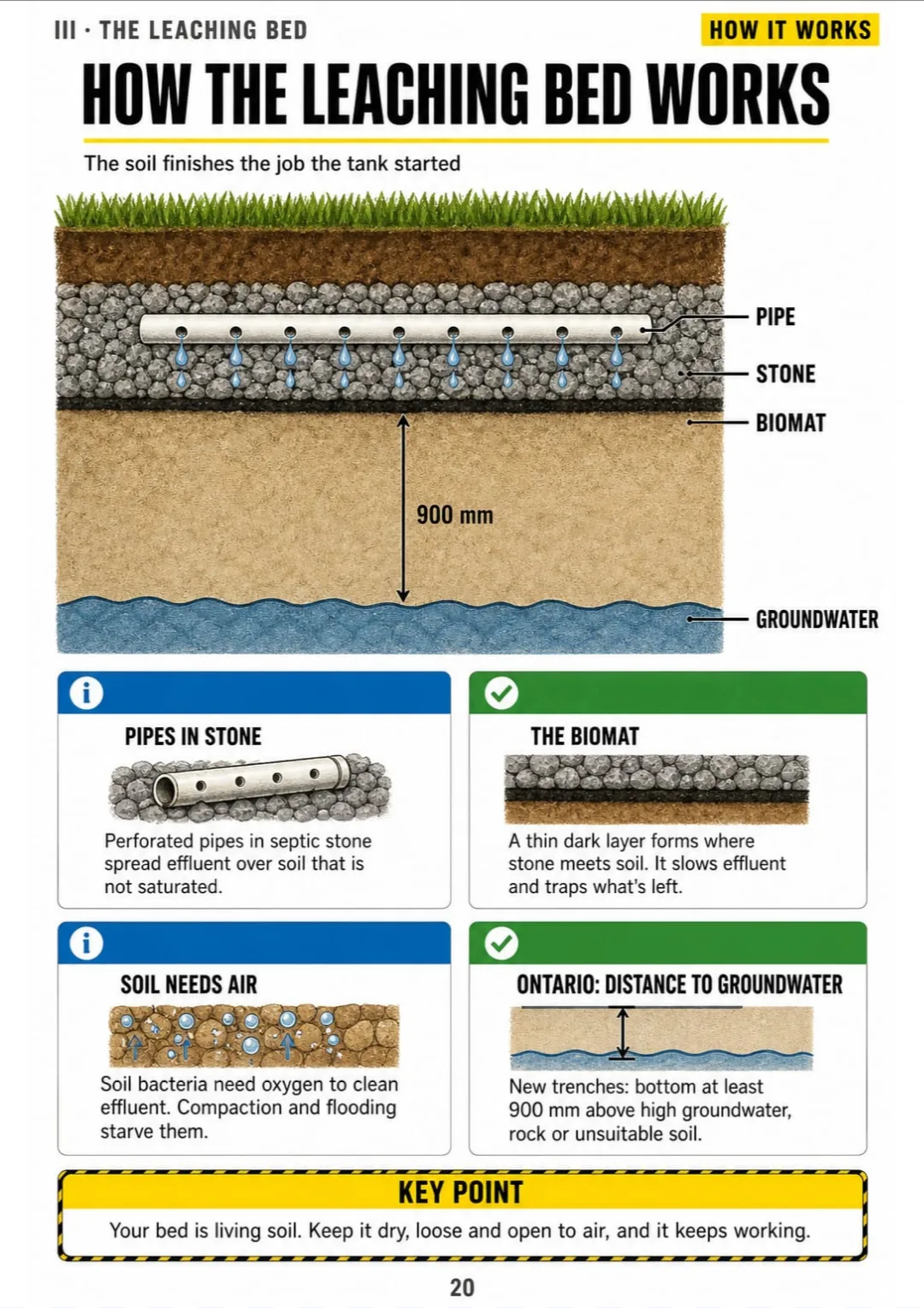
The pamphlet explains the bed in paragraphs: distribution pipes, aggregate, biomat, unsaturated soil, separation from groundwater. Words that never show you what's under your feet.

In the book, the leaching bed is one page: a cross-section with the pipe, the stone around it, the biomat and the soil below, and the gap to groundwater (900 mm in Ontario) marked right on the drawing.
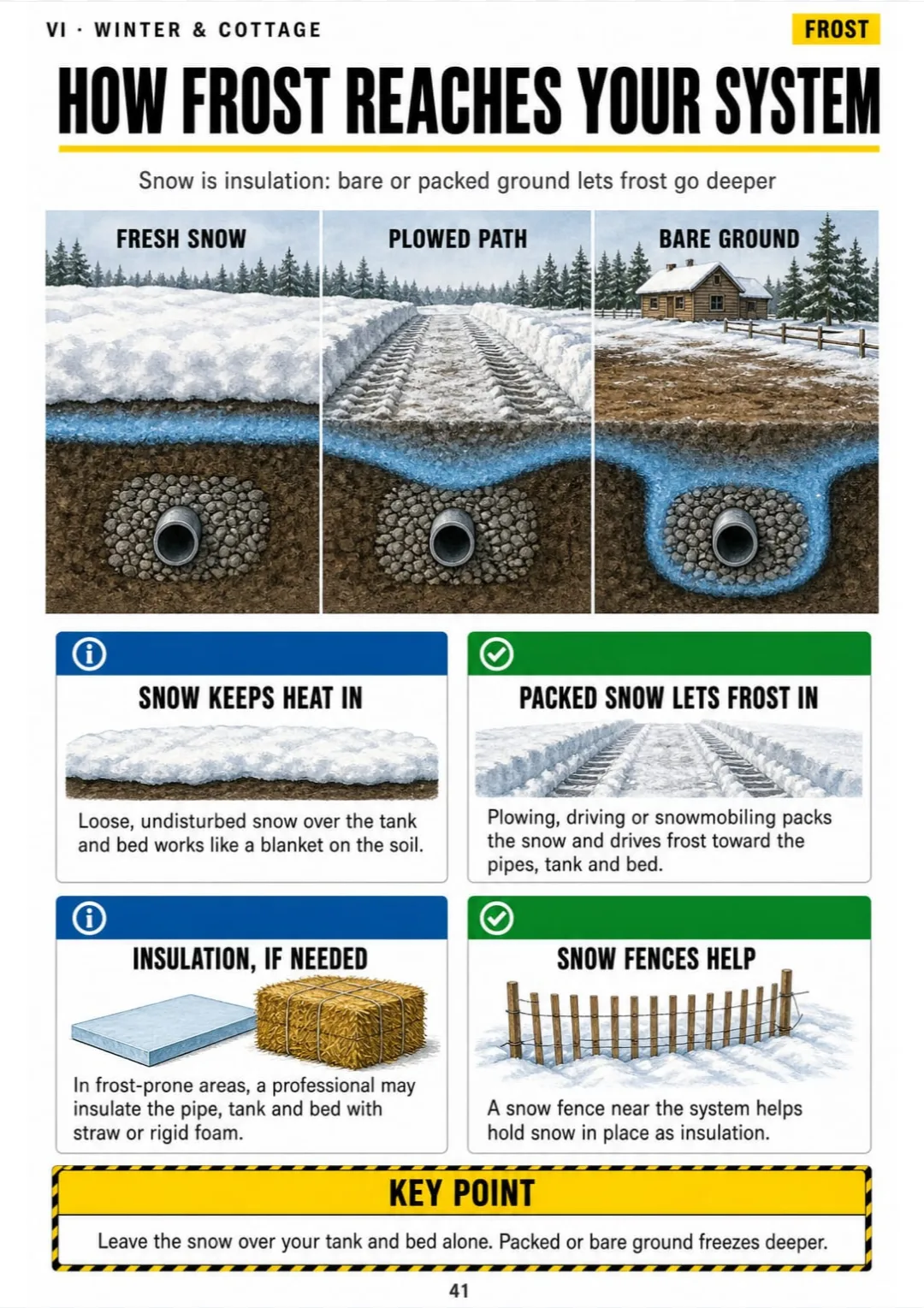
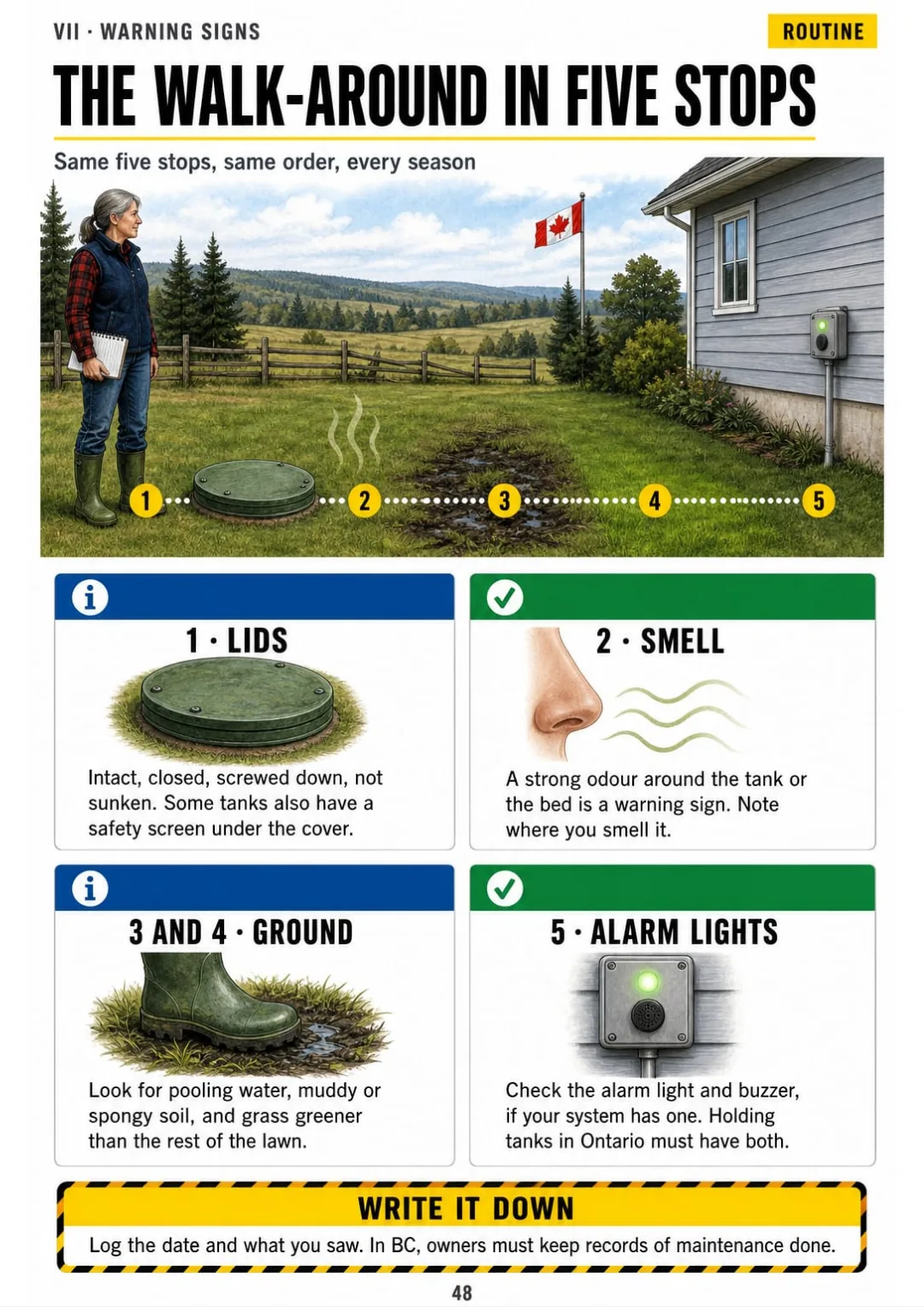
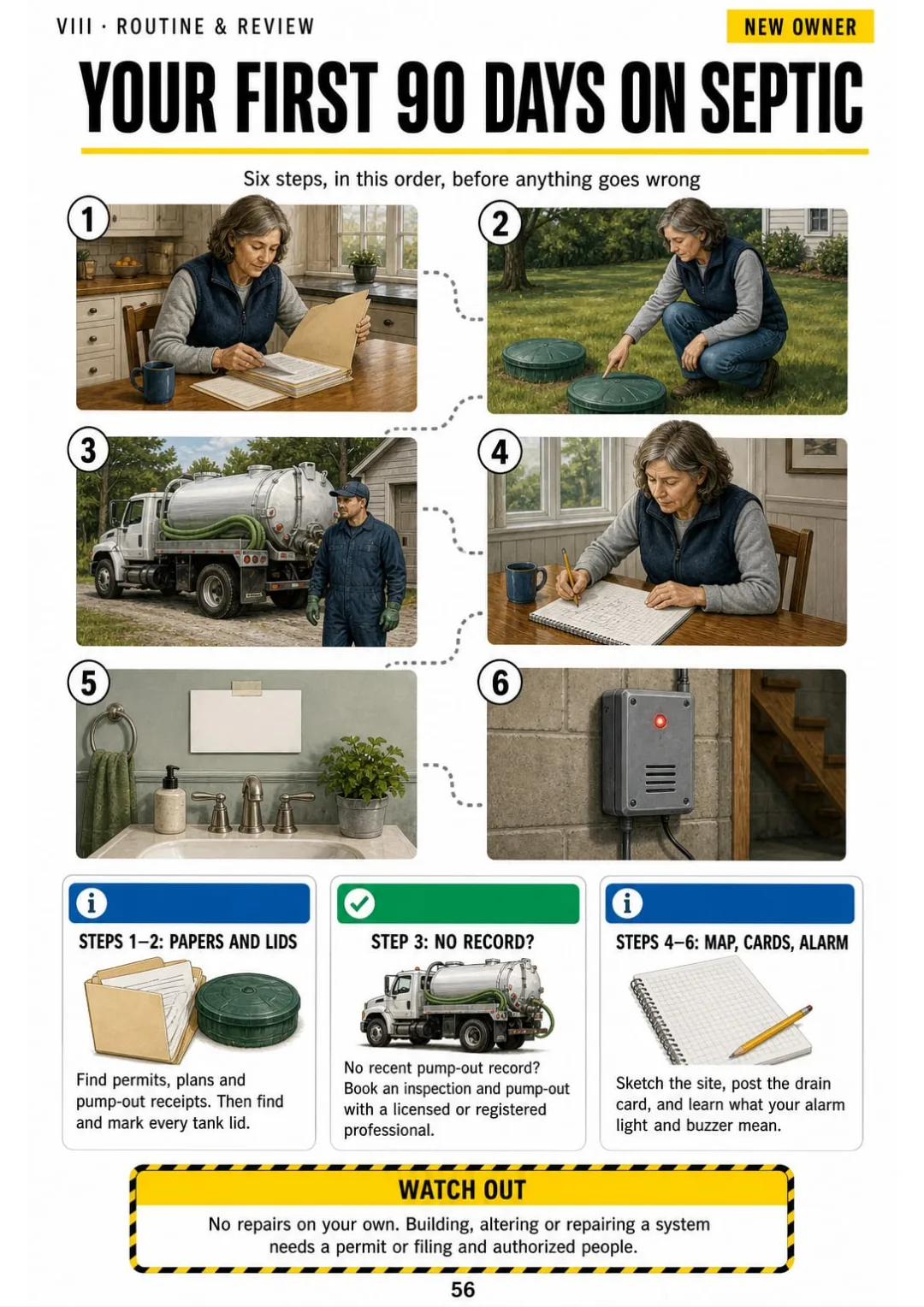
Same with the tank in three layers, the raised bed, frost over the pipe, the five-stop walk-around and your first 90 days: each one has its own page.
You look at the wet patch, you know what the bed is doing underneath, and you know whom to call first without digging out the pamphlet again.

Your system at a glance, inside the tank, the leaching bed, other types of systems, what goes down the drain, Canadian winter and cottage season, warning signs and whom to call, and your routine with the most frequent mistakes: 64 pages, all illustrated.
Think of it this way:
It's a Saturday in March, the snow is melting and the downstairs toilet gurgles every time the washer drains. You need to know what's going on in the tank, right now.
You open the book to the gurgling-drains page and follow the drawing from the washer to the tank: the first safe step and whom to call, before anything backs up.

The pump chamber and its alarm, frost over the pipe, spring thaw, the five-stop walk-around: you find each one by its drawing, not by its paragraph.
Your Septic System, Illustrated is 8 parts and 60 topics, all drawn, and at the end, the most frequent owner mistakes, myths vs facts and your whole system on one page.
What you see drawn, you don't have to memorize.
The whole system in one drawing, what it actually does, the words contractors use, who sets the rules in your province, your paperwork, finding the lids and sketching your site map.
Know what's in your tank before the truck arrives: the three layers, inlet and outlet baffles, one or two compartments, the effluent filter, tank size, when to pump and what happens on pump-out day.
How the bed works, the distribution box, gravity vs pressure-dosed, what can go on top, trees and roots, keeping water away and setbacks from the well and the lake.
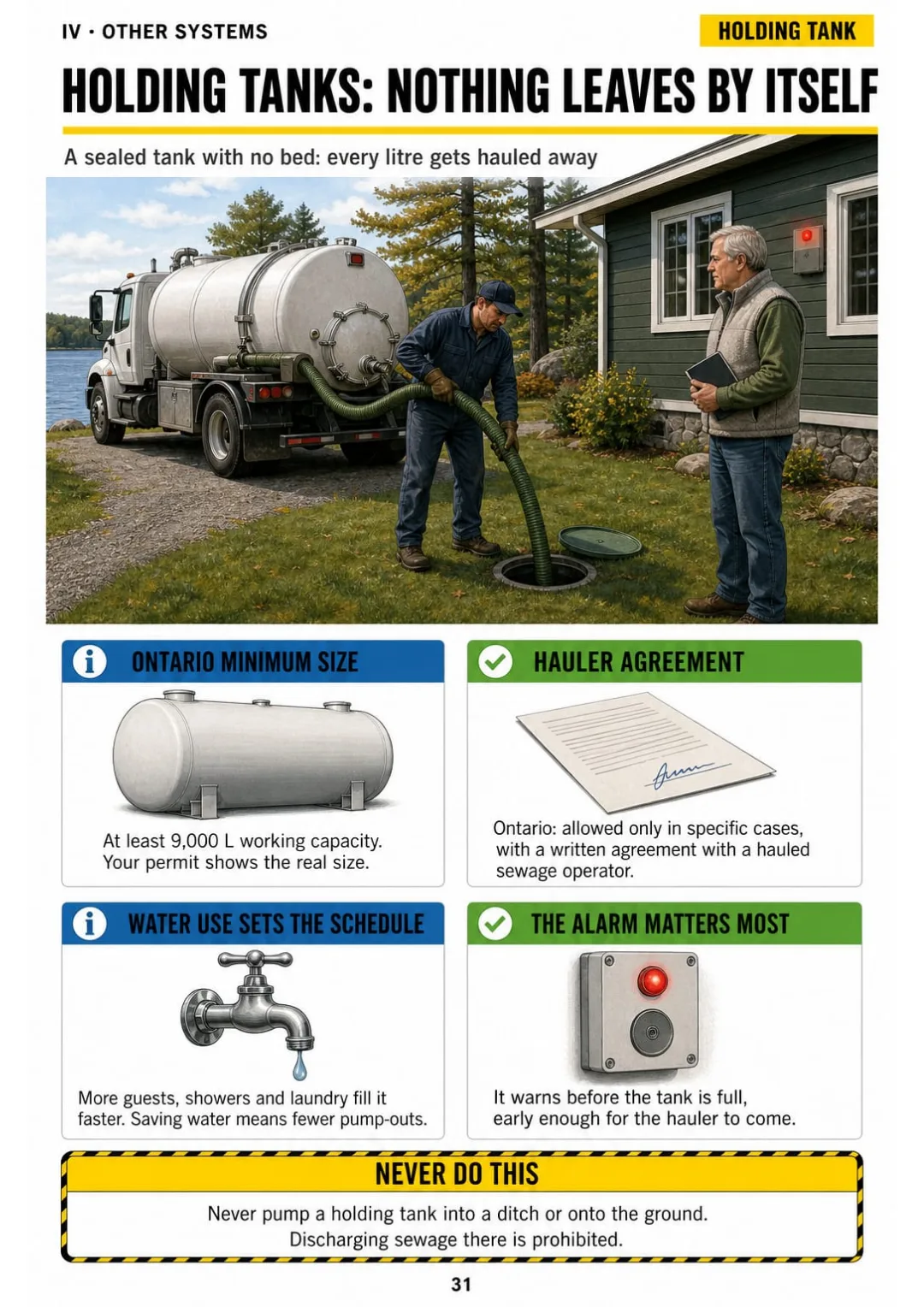
Raised beds and mounds, the pump chamber and its floats, the alarm panel, treatment units, holding tanks, outhouses, greywater and older cottage systems.
The only three things for the toilet, 'flushable' wipes, grease and food scraps, chemicals, medicines, additives, laundry and softeners, and saving water.
How frost reaches the system, the winter don'ts, a low-snow winter, a frozen system, spring thaw, and opening and closing the cottage.
Spot trouble early: the walk-around in the same order, gurgling drains, smells, wet spots and too-green grass, backups and signs near the well or lake, each with the first safe step and whom to call.
Your first 90 days, buying a rural home, your year on one page, reading a pump-out report, repair or replace, adding a bedroom or hot tub, frequent mistakes, myths and a final review.
At the end of the book: The 10 most frequent owner mistakes, myths vs facts and your whole system on one page.


Practise on real-life situations (a gurgling drain, a wet patch over the bed, an alarm light at night) and check the first safe step and whom to call.

Every key topic on one card: the tank layers, the do and don't list and the warning signs, ready to print and keep by the utility room.
📄 This is a digital PDF book sent to your email: nothing is printed or shipped.
PDF by email: We email you Your Septic System, Illustrated as a PDF, together with the two free books. It's a single payment: no installments, no extra charges.
See where everything is and what the tank and bed do, then follow your first 90 days step by step.
Slow drain, a smell or a wet patch: find the sign on its page and see the first safe step and whom to call.
Finally see what's under the grass, and keep the do's, don'ts and winter care printed by the utility room.
📄 This is a digital PDF book sent to your email: nothing is printed or shipped.
Try Your Septic System, Illustrated for 30 days, bonus books included.
We refund everything if the file won't open, if the book isn't what you see here, if you were charged twice or if the email doesn't arrive. Just email us.
You pay once. No subscriptions.
It's written for Ontario, BC, Alberta, Saskatchewan, Manitoba and Atlantic Canada. It covers gravity beds, raised beds and mounds, pump chambers, treatment units and holding tanks. Where a distance or interval changes by province, the page says so, so you can check it with your local health unit or authority, or your municipality.
From provincial onsite sewage rules (Ontario Building Code Part 8, BC, Alberta, Prairie and Atlantic rules) and CSA B66 and B65, explained by concept and never quoted. Intervals and distances are marked to verify with your health unit or municipality.
No. It's an independent illustrated book, not affiliated with any government, health unit, municipality or CSA Group.
No. It helps you understand and check your system. Pumping, repairs, permits and any work are always for a registered septic contractor, and you never enter or lean into a tank.
The pamphlet gives you the rules in text. Here every topic is a drawing: the tank cut open, the bed in cross-section, frost over the pipe, each warning sign with the first safe step and whom to call. Keep the pamphlet for your local numbers; use the book to see what they mean under your lawn.
The 64-page book and the 2 free books arrive as PDFs by email, at the address you enter at checkout. The free books are Septic Scenarios: What Would You Do First? (real-life situations to practise the first safe step and who to call) and Septic Quick-Reference Cards (the do's, don'ts and winter care, ready to print).
No. It's a one-time payment.
Yes. Print it at home or at a print shop and keep the cards by the utility room or in the garage.
You have 30 days. We refund everything if the file won't open, if the book isn't what you see on this page, if you were charged twice or if the email doesn't arrive: just email us.
No more rereading pamphlets that don't stick.
Your tank's three layers: you see them drawn, and that's it.
You walk your yard knowing where everything is.
Drawings make studying faster.
The book is right below.
One-time payment: US$ 27 · Guarantee: 30 days · PDF by email
YES, I WANT YOUR SEPTIC SYSTEM, ILLUSTRATED FOR US$ 27📄 This is a digital PDF book sent to your email: nothing is printed or shipped.